Entertainment
Best Jazz Albums for Beginners: 15 Essential Starts

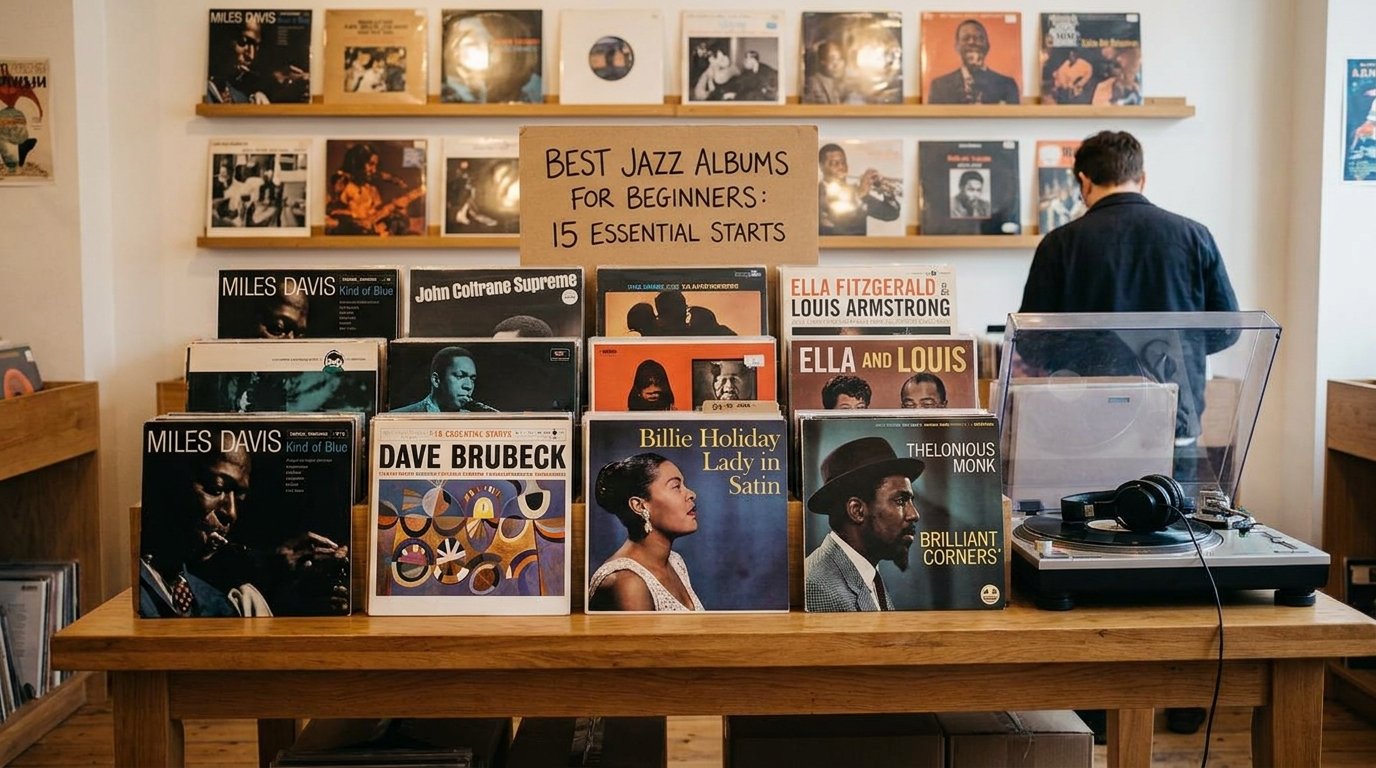
Jazz can feel intimidating. The history is deep, the subgenres are many, and the sheer volume of recordings is overwhelming. But the best jazz albums for beginners share a common thread: they are warm, melodic, and welcoming from the very first note.
They prioritize feel over complexity, create atmosphere rather than demand attention, and reward listeners who come to them with open ears rather than theoretical knowledge. This guide curates 15 definitive albums that serve as the perfect gateway into the genre, spanning cool jazz, hard bop, vocal jazz, and beyond.
Here are the best jazz albums for beginners, carefully chosen to make your first listen a joy, not a challenge.
1. Miles Davis – Kind of Blue (1959)
This is the undisputed starting point and the best-selling jazz album of all time. It is the ultimate example of modal jazz, a style that uses scales rather than rapid chord changes, resulting in a spacious, unhurried sound.
Why it works: Featuring the legendary sextet of John Coltrane and Cannonball Adderley, the album’s five tracks are meditative and instantly recognizable. The opening bassline of “So What” is iconic, and the album requires zero prior jazz knowledge to enjoy.
Start with: “So What”
Style: Modal Jazz
Read: crack streams – Watch Free Live Sports in HD
2. Dave Brubeck Quartet – Time Out (1959)
Don’t let the odd time signatures scare you. While much of jazz swings in 4/4, “Take Five” is built on a 5/4 pulse that feels playful rather than academic. This is jazz that crossed over onto the pop charts, largely due to Paul Desmond’s irresistible alto sax melody.
Why it works: It’s a singular mix of the familiar and the unexpected. The sense of effortless swing and the catchy melodies make it one of the best jazz albums for beginners who might be coming from rock or pop music.
Start with: “Take Five”
Style: Cool Jazz
3. John Coltrane – Blue Train (1957)
Coltrane can be a dense listen, but Blue Train captures him before his later avant-garde experiments. Recorded for Blue Note Records in 1957, this album finds the saxophonist playing soulful, unhurried solos that are deeply rooted in the blues.
Why it works: This album is a delight from start to finish. The title track’s bluesy swagger is emotionally direct, and the presence of Lee Morgan on trumpet adds an extra layer of accessibility. It’s a perfect example of accessible hard bop.
Start with: “Blue Train”
Style: Hard Bop
4. Art Blakey and the Jazz Messengers – Moanin’ (1958)
If you are a fan of blues or gospel music, this is your entry point. The title track opens with a gospel-drenched piano intro from Bobby Timmons that builds into a powerful, hard-bop masterclass.
Why it works: Blakey’s drumming is physically exciting—you feel it before you analyze it. The blues foundation makes it instantly accessible, making this one of the best jazz albums for beginners seeking energy.
Start with: “Moanin’”
Style: Hard Bop
5. Herbie Hancock – Head Hunters (1973)
This is jazz, but you can dance to it. Head Hunters is a landmark jazz-funk album. If you have ever listened to James Brown or classic R&B, the rhythmic language here is immediately familiar.
Why it works: The opening bass riff on “Chameleon” is one of the most infectious in music history and became a staple of hip-hop sampling culture. It was the first jazz album to go platinum, proving how accessible it is.
Start with: “Chameleon”
Style: Jazz-Funk
6. Lee Morgan – The Sidewinder (1964)
If you are a “groove seeker,” this is the one. The Sidewinder features a boogaloo groove—essentially jazz you can move to. The title track rides an Afro-Cuban dance rhythm with infectious energy.
Why it works: The melody is a simple, repeated riff that embeds itself in your memory within the first 30 seconds. It’s a record you don’t need to sit still for.
Start with: “The Sidewinder”
Style: Soul Jazz
7. Getz/Gilberto – Stan Getz & João Gilberto (1964)
Bossa nova is the gentle giant of jazz styles. This album is warm, harmonically lush, and features the liquid tenor saxophone tone of Stan Getz.
Why it works: It won the Grammy Award for Album of the Year in 1965. “The Girl from Ipanema” is one of the most recognizable melodies in 20th-century music, providing a perfect gateway into the album’s gentle mood.
Start with: “The Girl from Ipanema”
Style: Bossa Nova
8. Ella and Louis – Ella Fitzgerald & Louis Armstrong (1956)
Vocal jazz removes one of the biggest barriers for new listeners: the abstraction of instrumental music. This album features two of the greatest artists in music history performing beloved standards with warmth, humor, and conversational ease.
Why it works: The interplay between Fitzgerald and Armstrong is immediately charming. It’s the record to recommend to anyone who says jazz feels cold or distant.
Start with: “Isn’t This a Lovely Day”
Style: Vocal Jazz
9. Bill Evans Trio – Waltz for Debby (1962)
This is a masterclass in intimacy. Recorded live at the Village Vanguard, the album has audible room noise and quiet chatter between tracks, making it feel like you are in the club.
Why it works: Evans’ piano style is lyrical and classical in feel, building a natural bridge for listeners who come from classical music. It’s prototypical Sunday listening.
Start with: “My Foolish Heart”
Style: Piano Jazz
10. Oscar Peterson Trio – Night Train (1963)
Some jazz piano records can feel like a technical exam. This one never does. Peterson plays with joy. Blues-soaked and swinging, it is physically fun to listen to.
Why it works: Track lengths average under four minutes, which keeps the pacing tight and makes the whole album an easy, focused listen rather than a commitment. It’s pure, unfiltered joy.
Start with: “Night Train”
Style: Swing / Blues
11. Charles Mingus – Mingus Ah Um (1959)
Mingus wrote compositions that feel like short stories. Each track has a clear emotional arc rooted in blues, gospel, and swing.
Why it works: “Goodbye Pork Pie Hat,” written as an elegy for Lester Young, is one of the most emotionally direct pieces in jazz. You don’t need to know the backstory to feel its weight.
Start with: “Better Git It in Your Soul”
Style: Hard Bop
12. Wes Montgomery – The Incredible Jazz Guitar of Wes Montgomery (1960)
Guitar is the most familiar instrument to rock and pop listeners. Montgomery’s technique of playing melodies in octaves produces a full, rounded tone that sounds welcoming rather than “difficult”.
Why it works: Melodic statements arrive quickly and clearly, with space for solos to develop without overcomplicating the picture. It’s a perfect start for guitar fans.
Start with: “West Coast Blues”
Style: Hard Bop / Guitar
13. Vince Guaraldi Trio – A Charlie Brown Christmas (1965)
This is the “I didn’t know that was jazz” entry point. Most listeners already know this music.
Why it works: “Linus and Lucy” is one of the most recognizable piano pieces in American pop culture. It demonstrates the small-group piano trio format in its purest, most uncluttered form.
Start with: “Linus and Lucy”
Style: Piano Trio
14. Herbie Hancock – Maiden Voyage (1965)
This is the Blue Note pinnacle. Hancock was just twenty-five when he recorded this, featuring a quintet that creates oceanic atmospheres on the title track.
Why it works: Built on a deceptively simple two-chord vamp, it is modal jazz at its most accessible without sacrificing depth. It is perfect for those seeking atmosphere.
Start with: “Maiden Voyage”
Style: Modal Jazz
15. Sonny Rollins – Saxophone Colossus (1956)
This is one of the most celebrated albums by a tenor saxophone giant. Saxophone Colossus is a testament to melodic improvisation.
Why it works: The album is grounded in clear, memorable themes. Rollins’ playing is robust but accessible, making it a solid pick for listeners who want to focus on melody.
Start with: “Blue 7” or “St. Thomas”
Style: Hard Bop
Conclusion
Starting a jazz collection is about finding the mood that resonates with you. Whether it is the cool introspection of Miles Davis, the soulful energy of Art Blakey, or the vocal charm of Ella Fitzgerald, these albums represent the essential cornerstones of the genre.
The key to listening to jazz isn’t technical knowledge—it’s comfort. These records don’t overwhelm; they create space. They invite you in gradually and reward repeated listening. Let the music “wash away the dust of everyday life,” as Art Blakey once said, and enjoy the journey into one of the richest musical traditions in history.


 Music1 year ago
[Album] あの – 猫猫吐吐 (2023.12.13/MP3 + Hi-Res FLAC/RAR)
- Music1 year ago
[Album] back number – ユーモア (2023.01.17/MP3/RAR)
 Music1 year ago
[Album] 安室奈美恵 – Finally (2017.11.08/MP3+Flac/RAR)
- Music1 year ago
[Single] tuki. – 晩餐歌 (2023.09.29/Flac/RAR)
- Music1 year ago
[Album] 小田和正 – 自己ベスト-2 (2007.11.28/MP3/RAR)
- Music1 year ago
[Album] 米津玄師 – Lost Corner (2024.08.21/MP3 + Flac/RAR)
 Music1 year ago
[Album] ぼっち・ざ・ろっく!: 結束バンド – 結束バンド (2022.12.25/MP3/RAR)
- Music1 year ago
[Single] ヨルシカ – 晴る (2024.01.05/MP3 + Hi-Res FLAC/RAR)